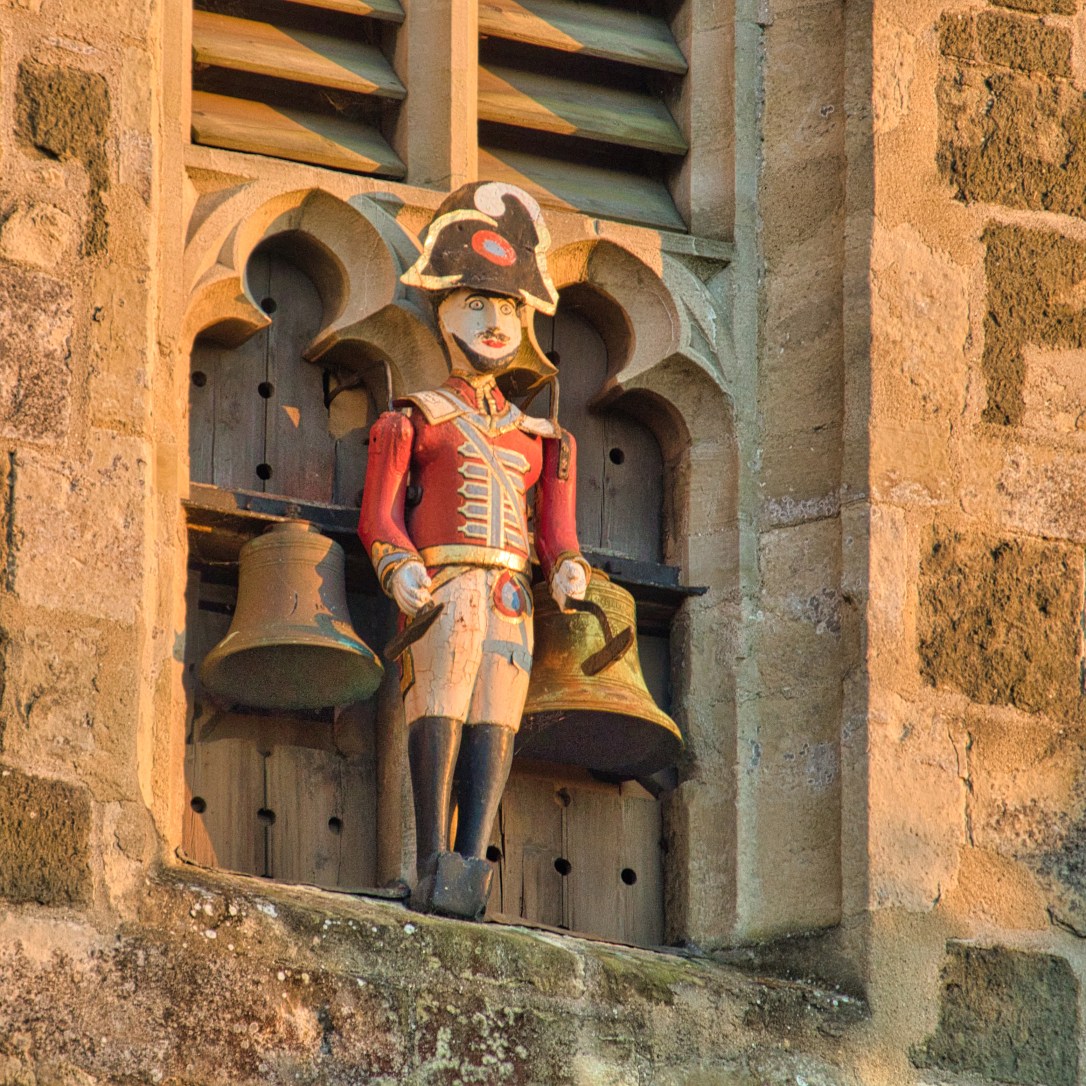
“QJack” photo by Alan Bentley – The Quarter Jack basking in the evening sunshine.
The automatic chiming of the Minster bells, marking the passing of time, is a familiar and regular feature of Wimborne’s soundscape as it most likely has been for over 600 years. It is evident from the expenditures recorded in the Churchwardens’ Accounts (which go back to 1403 and still extant) the importance the Minster has attached to the sound of its bells broadcasting over the town. Charles Mayo’s 1860 publication ‘History of Wimborne Minster’(1) says “The bells and chimes appear to have been the great delight of the people of Wimborne from time immemorial. The date of the chimes certainly goes back to the fifteenth century, and from that time the expenditure of labour and money on keeping them in order was one of the chief items of the churchwardens’ accounts. They would seem, therefore, to have been kept in a pretty constant state of repair; and in 1629 their misuse is made a special subject of complaint by the churchwardens.”
On March 17th, this year, we saw a new chapter in this legacy when the dismantled components of the redundant, 160 year old tune playing machine were carefully lowered by The Cumbria Clock Co. from the chamber between Ringing Chamber and Belfry to the Baptistery floor in the West Tower. The components were then transported to the Company’s workshops for restoration. ‘The chime barrel is manufactured from cast iron, weighs 400 [- 500] Kg, and mounted into a wooden frame, with a winding barrel, and would have operated 16 hammers working on 8 bells. When in position it would have been manually wound on a weekly basis with the weight falling to a pre-determined level’(3).
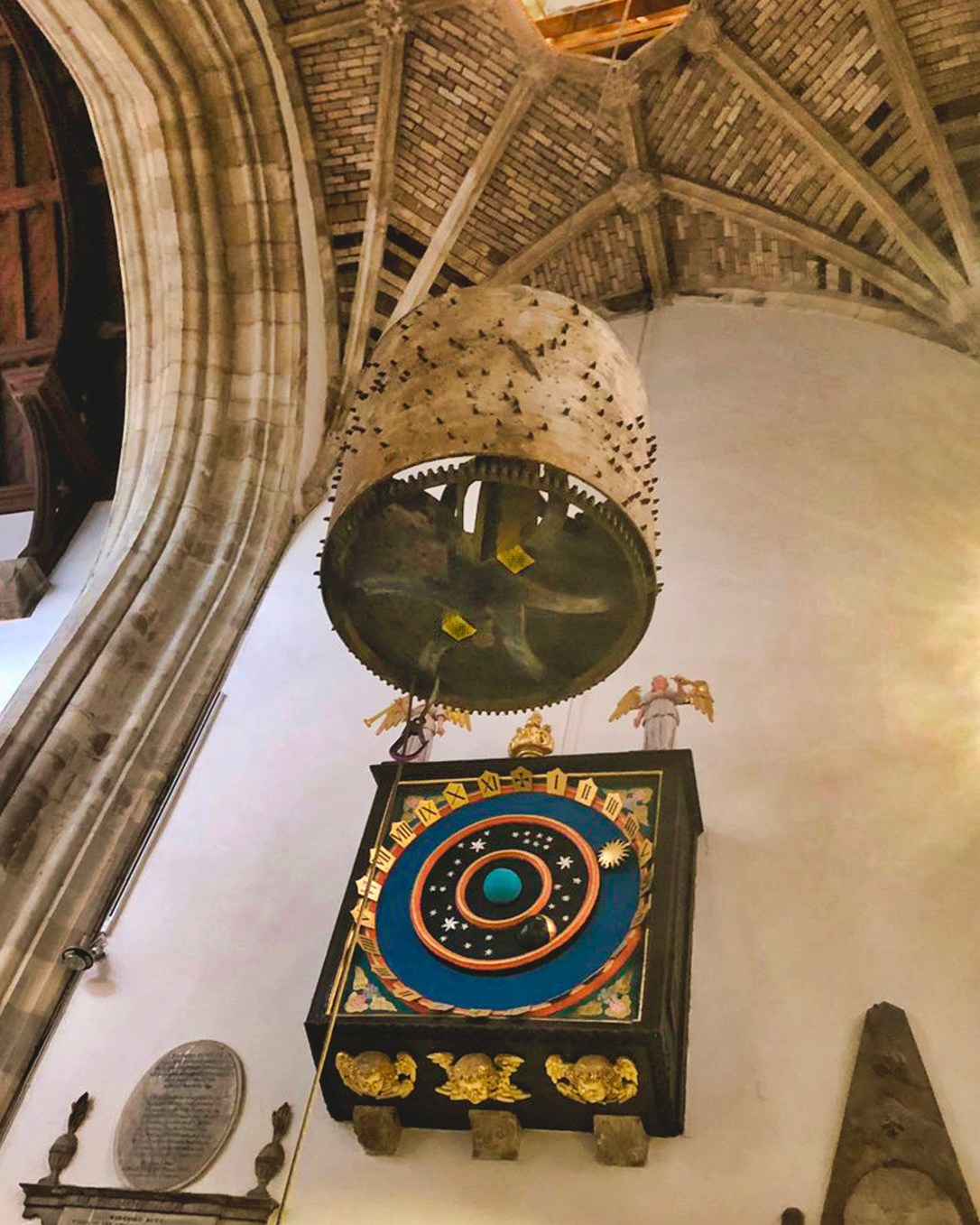
“Descent” photo by Keith Cotton – Music barrel descending in front of the astronomical clock.
According to a record of its inscription the earliest bell was given in 1385, the Minster’s pre-Copernican astronomical dial and its original movement, or Horloge, probably date from about this time as well. The Churchwardens’ Accounts for 1409 record 6s. 8d. being paid for a case for the dial and an entry for 1413 refers to 6d. being paid for repairs to ‘le clok’. According to Edward Stanham(2) the early use of the word “clock” meant a weight-driven mechanism for striking the hours on a “clock-bell”, often without a dial to indicate the hours.
The first reference to a chime occurs in 1496 “for wire for the chyme” which was possibly a mechanism for sounding the quarters on two bells (rather than something that played tunes) and integral with the movement for the astronomical dial(2); the 1475 Accounts indicate the Minster possessed 4 bells, at least. Since 1612 the various forms of the Quarter Jack, or Jack man, have continued to ring the quarters on two clock bells fixed on the north face of the West Tower. The present version dates from the early 19th century, is 5’ 2”/1.58 m. tall and dressed as a Grenadier of the Napoleonic wars.
It’s not until 1535-36 that mention is made of ‘a full chiming mechanism which would have been a wooden barrel having iron lugs which pressed on keys as it was rotated by a separate, descending weight. The keys would have been connected by wires to hammers on the bells and the clock movement would have been adapted to start the chimes at fixed times’(2). The Accounts for these years indicate a total of £1 11s. 4d. was ‘paid for making of the chyme’, equivalent to about £1,300 in 2020 terms(5). Compare this with the sum “paid towards the Cheyme… £40 5s. 10d.” during 1575, equivalent to about £17,750 nowadays. Despite this comparatively large outlay, there were still regular payments made for maintenance and repairs to the chimes until the mid-1590s when the dial, clock and chimes were moved from the Central Tower to the West (or “Speer”) Tower, constructed in 1464.
In 1856-58 a large scale restoration of the Minster was undertaken and a new tune playing chime installed together with the augmentation of the then 6 bells to 8. Mayo(1) says “Considerable pains have been bestowed on the restoration of the chimes, which had ceased to play for some years. They are now furnished with eight tunes, which delight the people of Wimborne, with more or less regularity, four times in the twenty-four hours.” However, he is at pains to point out that the choice of tunes is “… questionable, most of them being popular airs, which, whatever their merits may be, seem somewhat out of place in a church tower.” He goes on to describe a scene where “A funeral was slowly winding its way through the principal streets of the town towards the new cemetery, one of the bells in the tower tolling the while, when suddenly the clock struck twelve, and the chimes immediately struck up ” Rule Britannia,” to which accompaniment the mourners had to proceed till the bells had had their say out. Chime music, in these days of popular concerts and barrel-organs, is probably falling in public estimation …”.
An entry in the Accounts for 1875 records a payment for fixing the tunes on the chime barrel after which no further mention is made until 1907 when expert opinion was sought for putting the apparatus into proper repair. Nothing appears to have been done and the dismantled components have since languished in their loft until March 17th. During this time there were concerns about the weight of the chime barrel bearing on the wooden beams immediately below, and it was decided to move the barrel against the tower wall to mitigate any adverse structural effects. It is likely the bell ringers will now be just as relieved as the beams with the removal of the barrel.
According to Stanham(2) during the mid-18th century it was decided to replace the clock movement with the present three train mechanism made by William Monk, blacksmith of Berwick St. John, south Wiltshire. The movement, 5’ 8”/1.63 m. long by 3’ 1”/0.94 m. high, has 3 trains and operates the astronomical clock, Quarter Jack and hour bell; the cabinet sits on a raised platform in the Ringing Chamber. The ‘Monk’ clock required little more than regular oiling and maintenance until 1909 when it and the Horloge were thoroughly re-conditioned. For 30 years from 1965 Maurice Jenkins as verger would regularly and lovingly attend the clock to wind the clock weights up and make adjustments, having just climbed the 72 steps of the spiral staircase. When this became too strenuous for Maurice it was decided to adapt the mechanism for electrical, automatic winding, undertaken by ‘Smith of Derby’.
A working scale model of the clock, dial and Quarter Jack was made in 1916 by William Kerridge, a Wimborne clockmaker and after his death the model was presented to the Minster in 1951 by his son, Ralph. The model stood in the Chained Library for many years until it was moved to its place beneath the dial in the Baptistery.
As for the tune playing mechanism, once restored it will be returned to become a feature of the Minster’s planned visitors’ centre(4). Although it hasn’t played for very many years the apparatus has become one of the numerous Minster artefacts and being on show will be a reminder to the parishioners and a point of reference for visitors about this important part of the Minster’s heritage.
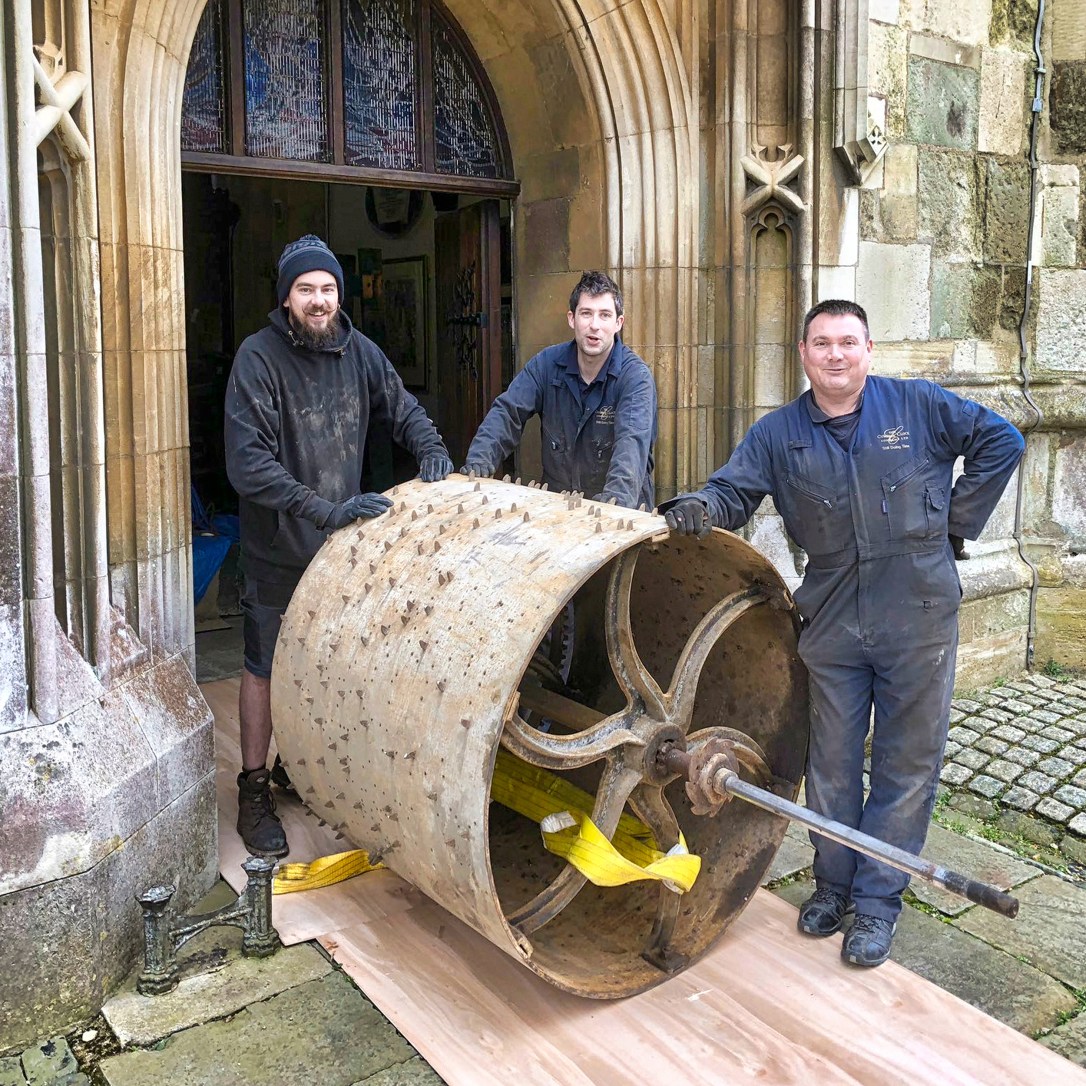
“West Door” photo by Keith Cotton – The barrel about to be loaded on the transport.
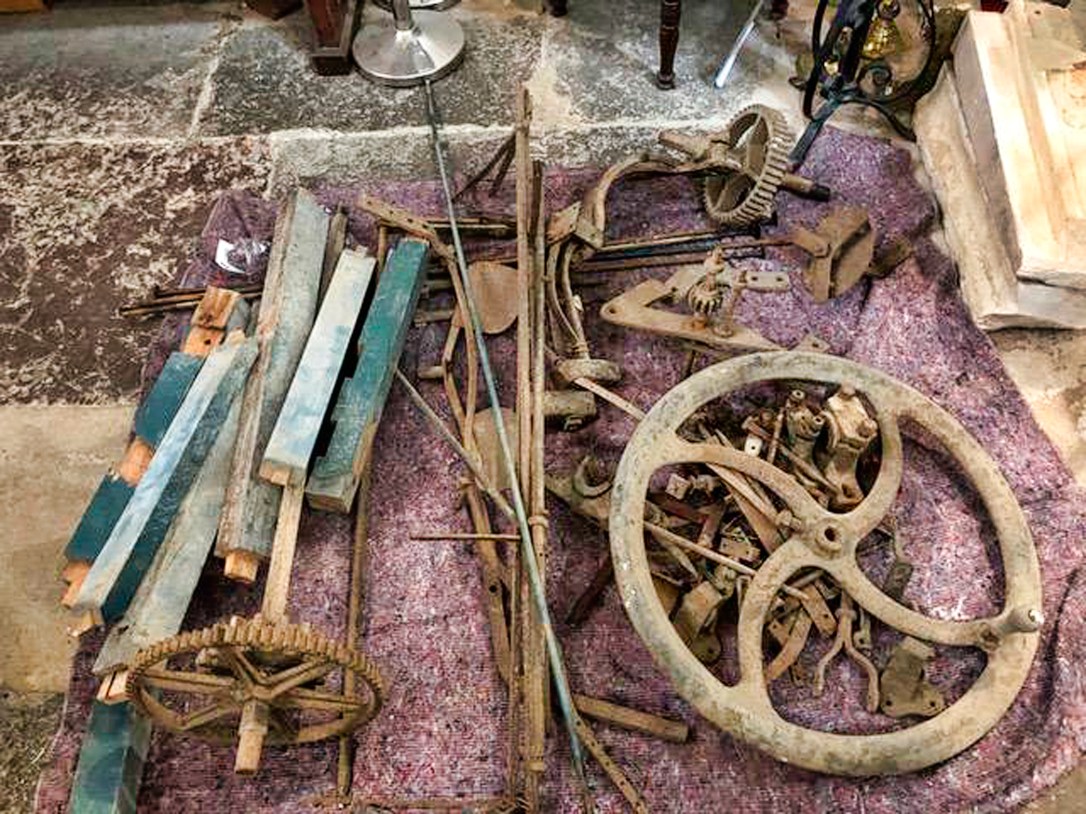
“InBits” photo by Keith Cotton – Some of the dismantled components.
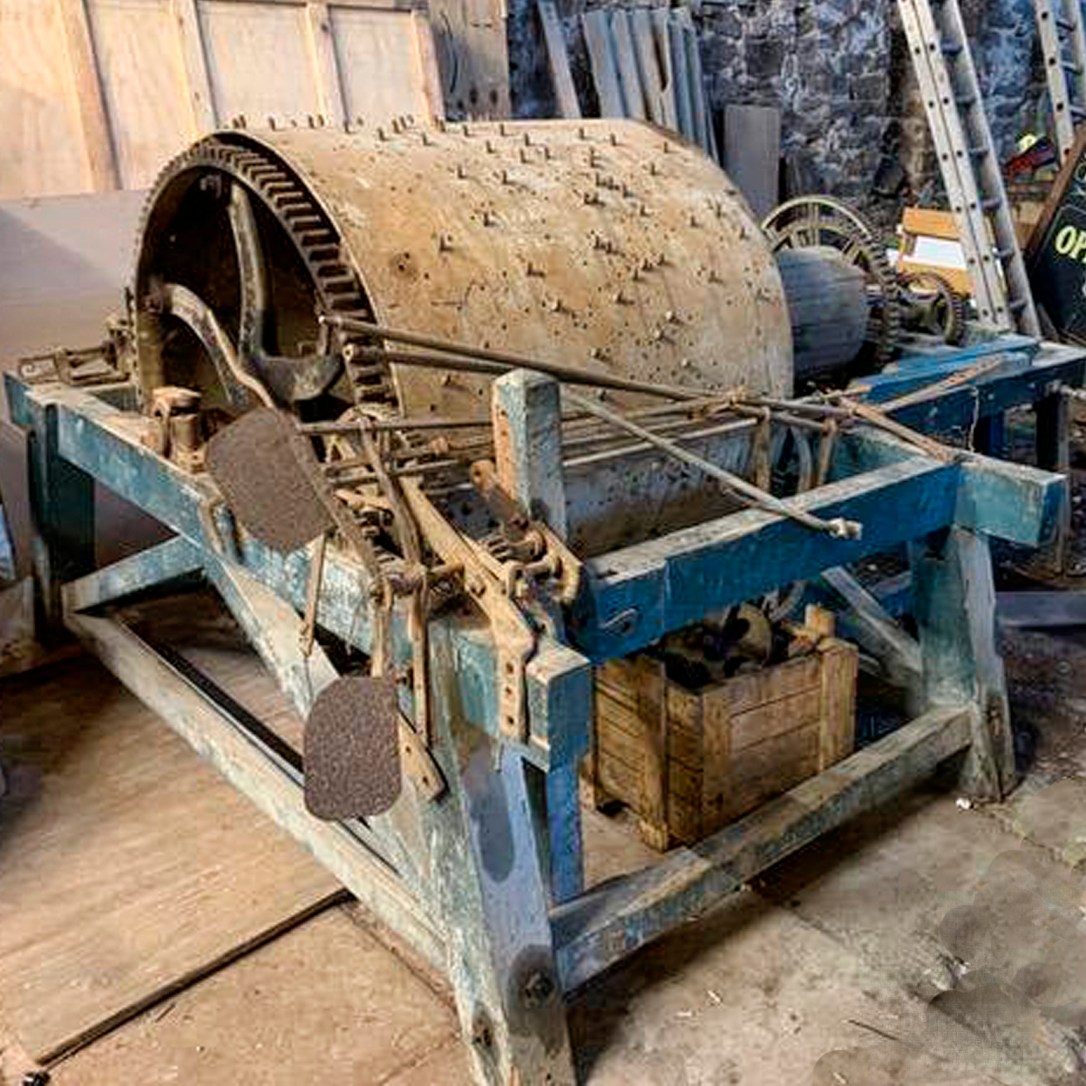
“Assembled” photo by Keith Cotton – Components placed in the frame.
I would like to thank the following for their contributions in the preparation of this article: Keith Cotton (Technical Sales Manager, The Cumbria Clock Co.), Gillian Richards and Bruce Jensen.
Compiled by Alan Bentley | April, 2020
References:
- Charles Mayo, ‘History of Wimborne Minster, The Collegiate Church of Saint Cuthberga and King’s Free Chapel at Wimborne’, 1860.
- Edward Stanham M.A., ‘The Astronomical Clock in Wimborne Minster Dorset’, 1988. Includes the references to the Churchwardens’ Accounts.
- Keith Cotton (Technical Sales Manager, The Cumbria Clock Co.) – correspondence.
- Rosalind & Bruce Jensen, ‘The descent of the carillon’, Wimborne Minster Parish Magazine, April, 2020.
- Bank of England on-line currency converter.
 Wimborne Minster Bell Ringers